Visuell kunstner
Taring Padi
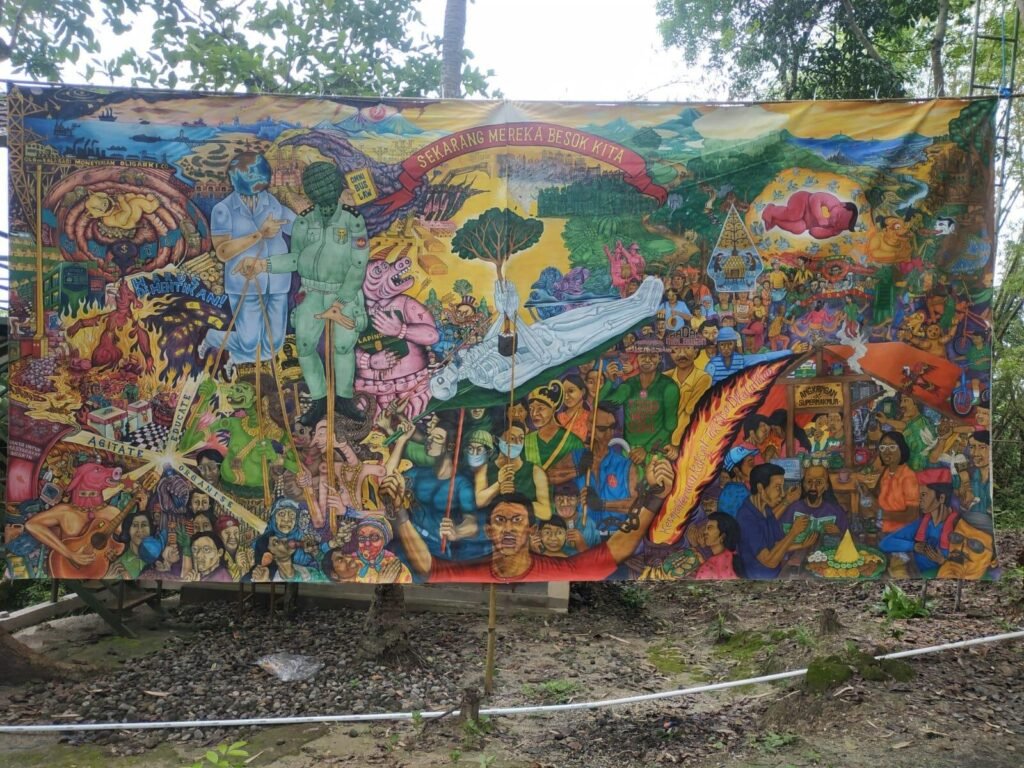
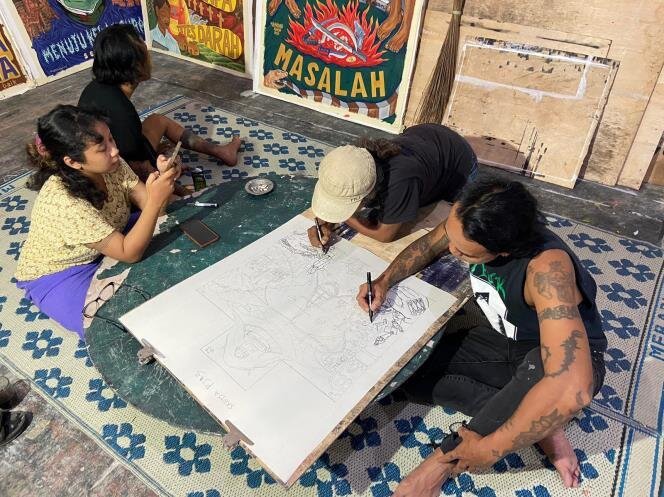
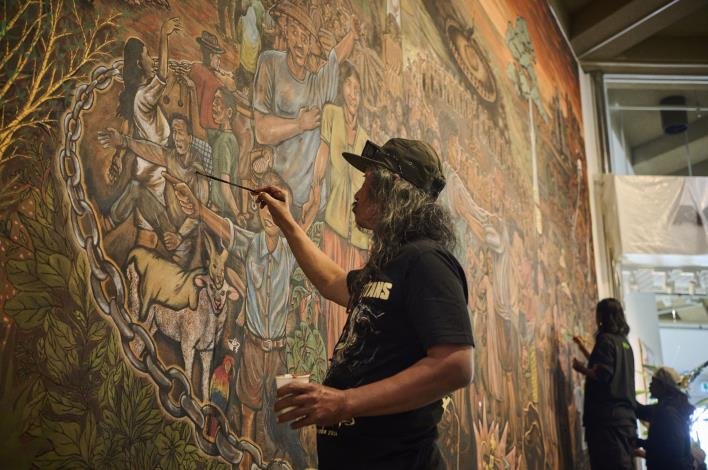
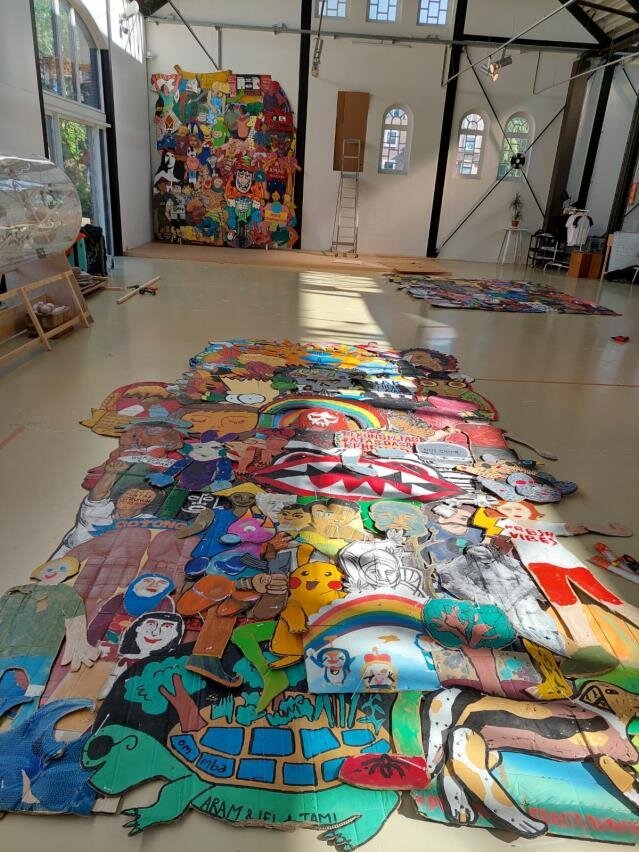
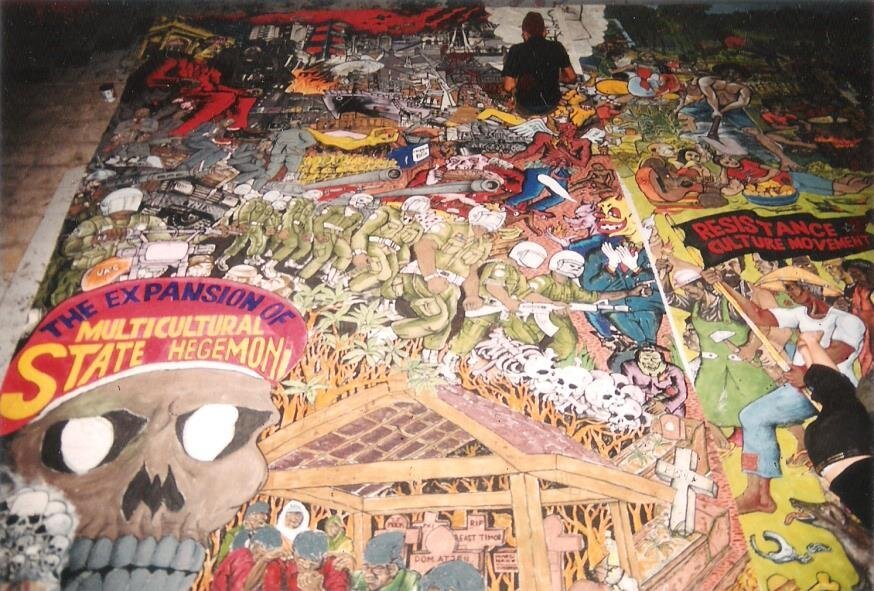
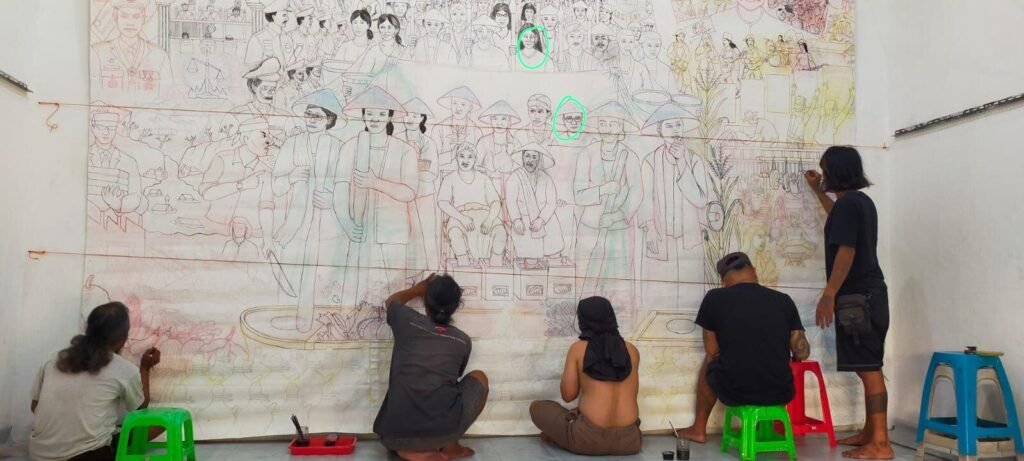
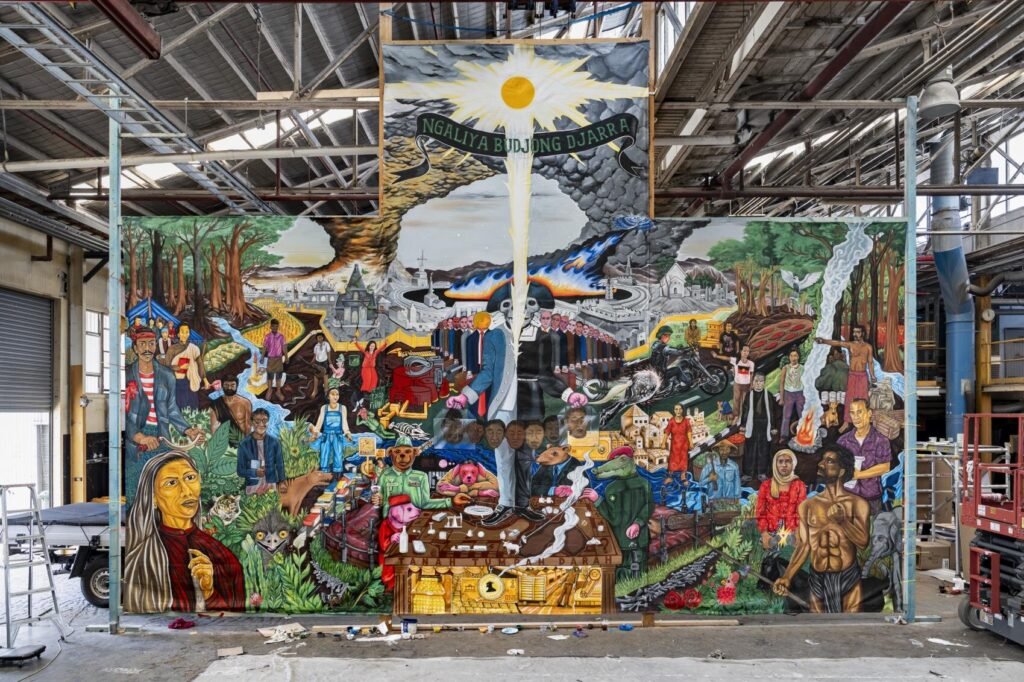
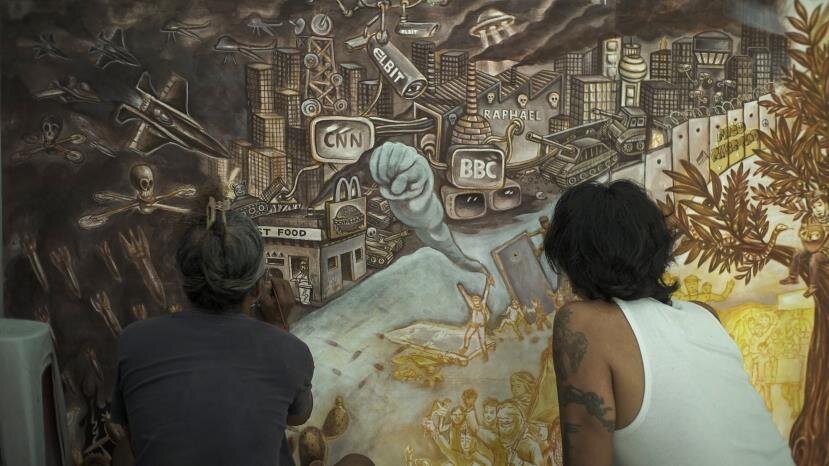
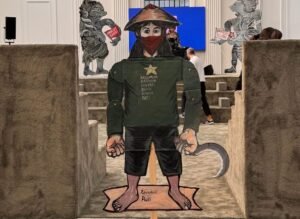
Taring Padi was founded in Yogyakarta, Indonesia in 1998 by a group of progressive art students and activists in response to the Indonesian sociopolitical upheavals during the reformation era. Consequently, Taring Padi’s artistic practice is always part of and contextualises within socio-political and cultural action and solidarity with wide range of communities and social groups. Taring Padi’s works and solidarity actions are manifested in collective works in the form of woodcut posters, large size banners, rontek, cardboard puppets, music, carnival and other art actions. In summer 2022 Taring Padi participated in documenta fifteen with a presentation of two decades artefact of direct political actions. Entitled “Bara Solidaritas/Flame of Solidarity”, the presentation in Kassel, Germany also included more than 1,000 cardboard puppets, which were made in collaboration with communities in Indonesian, the Netherlands, Germany, USA, and Australia who took part in the collective workshops. This is followed by a major show at the Framer Framed in Amsterdam, Tanah Merdeka/Liberated Land” (2023) which displayed a large-scale banner created in collaboration with Brazilian Jews diaspora organisation Casa Do Povo and Landless Peasant Movement (MST). Solo show, “Tanah Tumpah Darah/The Land where We Spill Our Blood to Defend It” took place at the Griffith University Art Museum, Brisbane in March 2024 and will feature, among others, a large-scale banner in collaboration with First Nation art collective ProppaNow. Apart from exhibitions activities, Taring Padi continue its core work of direct political actions. For example, together with villagers of Nguter, Sukoharjo in Central Java, Taring Padi campaign and fight a court battle against the RUM textile factory that has been disposing toxic waste in the river in the past 6 years. In December 2024, we lost in court, we appeal, and the struggle continues.
In the past 25 years, Taring Padi has evolved from an orthodox old-school left organization, which required a rigid and strong organizational discipline to a collective with a connective principle on the interface of ideology and camaraderie, which is in parallel with utilizing art and activism as tools for political action and education. Taring Padi’s recent active participation in the global contemporary art circuit traverse us to an unfamiliar territory where we engage our works more in discussion on the formulation of iconography, visual characteristic, motif and pattern, as well as historical specificities of their making. It remains to be seen how it might influence Taring Padi’s artistic practices. We do know, however, our ideological standpoint and methodological approach remains unchanged: direct engagement with and to be an organic part of social changes in the form of collective works that are progressive, inclusive and militant.